

01
Your accountant, inside
We do not hand you a tool and wish you luck with your accountant. They sign in with their own access and work on the same data, so you stop being the messenger between two systems.
Closed beta. We will write to you about how access works.
Invoices, expenses and the Spanish 303, 349 and 130 returns. No shared folders, nothing to export, and nothing typed twice.
Invoice
2026-0142
Issued
15/03/2026
From
Construcciones Delgado S.L.
B87654321
To
Suministros Ibéricos S.L.
B12345678
| Description | Qty | Unit price | Amount |
|---|---|---|---|
| Servicio de mantenimiento | 2 | 50,00 € | 100,00 € |
SHA-256 hash a3f1c8…9e4b
Chained to the previous one
ImmutableEvery quarter
Loose photos on a phone. A PDF that will not open. The supplier invoice that went missing. Your accountant asks for the usual and you send the usual back, and you both know something does not add up before you have started.
What you actually get
Not a feature list. These are the five reasons someone changes tools, and there is working code behind every one of them.
01
We do not hand you a tool and wish you luck with your accountant. They sign in with their own access and work on the same data, so you stop being the messenger between two systems.

02
Gapless numbering, VAT by place of supply, withholding and R1–R5 corrections. The rules live in the engine, not in your memory: if an invoice is missing something it does not issue, and it tells you what.
03
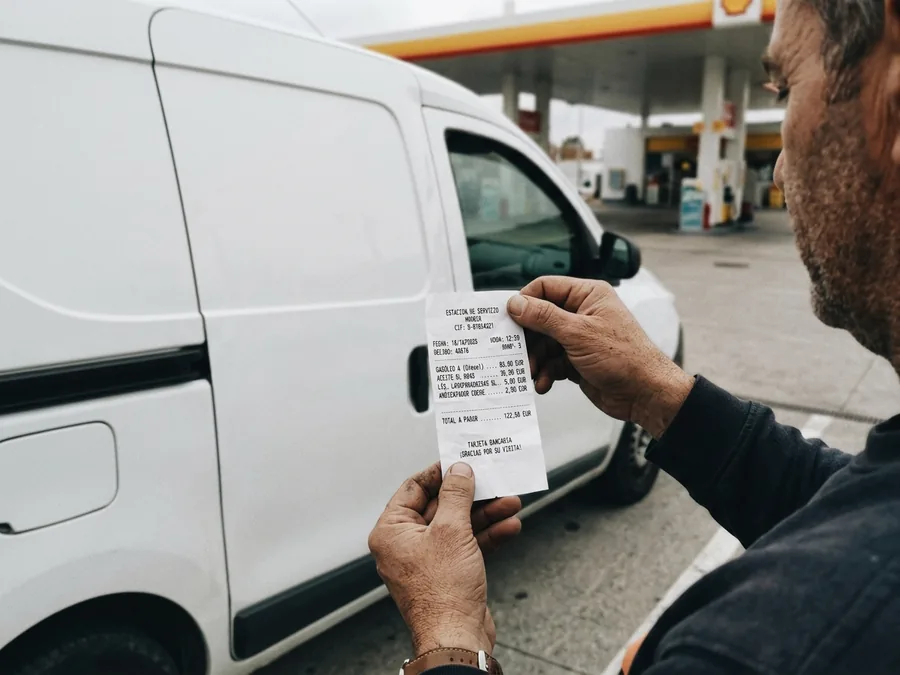
One photo and it is done with. Built for the real moment: standing up, one hand, poor signal. If there is no network it uploads when there is.

04
The model that reads your invoices runs on our machine. Supplier, tax number, dates, net, VAT, total and line items. None of your documents go out to an outside service.
05
What you capture lands in order from the first moment. Your accountant opens it and it is already there, and the return is calculated from the same figures as everything else.
What makes this different
You invoice and capture. Your accountant reviews, posts and files. Both happen in the same place, over the same data, with no handover and no second tool in between.
Raise an invoice, photograph a receipt, and it is done with. Everything you upload lands where it belongs from the start, not in a draft.
With their own login, seeing what belongs to your company and nothing else. No asking you for a file, no waiting for your email.
What is already recorded is never copied again. The legal ledger and the export come from the same figures the return is calculated from, so they cannot disagree.
Gapless numbering, VAT by place of supply, withholding, credit notes and R1–R5 corrections. If the customer has no address and the invoice needs one, it will not issue: it tells you first. VAT numbers are checked against VIES and the answer is recorded, including when there was no answer.
Upload a photo or a PDF and the model reads the supplier, tax number, dates, net, VAT, total and the line items. It runs in the background, survives a restart and retries on its own. Anything unreadable is typed by hand, and your correction is never overwritten.
Every expense moves through a review state with who did it and when. You can exclude what does not belong — and that decision is recorded, because an exclusion is an accounting decision too.
Calculated, reviewed, approved and frozen. VAT is split by line, not by an average from the header. And if the previous quarter was never filed, it does not hand you a zero: it tells you.
The legal ledger in the AEAT column order, and a per-period export carrying PGC account codes — to import into A3 or ContaPlus instead of typing it all again.
Why you can rely on it
An issued invoice cannot be edited, and not because we promise it: the database itself refuses. If somebody tries to change one behind the application, the database rejects it.
Every invoice carries a SHA-256 hash linked to the one before it, and a QR code. It passes all three test vectors published by the Spanish tax agency.
Once a return is approved the period locks and its documents stop moving. A figure you have filed does not change afterwards.
Each amount on a return can be followed back to the documents that make it up. If someone asks where a number came from, the answer exists.
When information is missing, the answer says so. A caveat is more useful than a confident zero.
For accountants
An accounting firm does not need an account per client. You sign in once and work across all of them, each in its own company, each with what belongs to it. No duplicated logins and no sharing passwords.
Where your data lives
Your data does not leave the European Union, and the model that reads your invoices is not a third-party service: it runs on our own machine. There is no subprocessor in another country reading your documents.
So nothing is a surprise
We would rather tell you here than let you find out later. None of this list is a promise: it is simply where things stand today.
You can create your account now. When you do, we will write to you explaining how access works: we approve accounts as the beta moves, so we can look after the people who come in.
No card. No commitment.